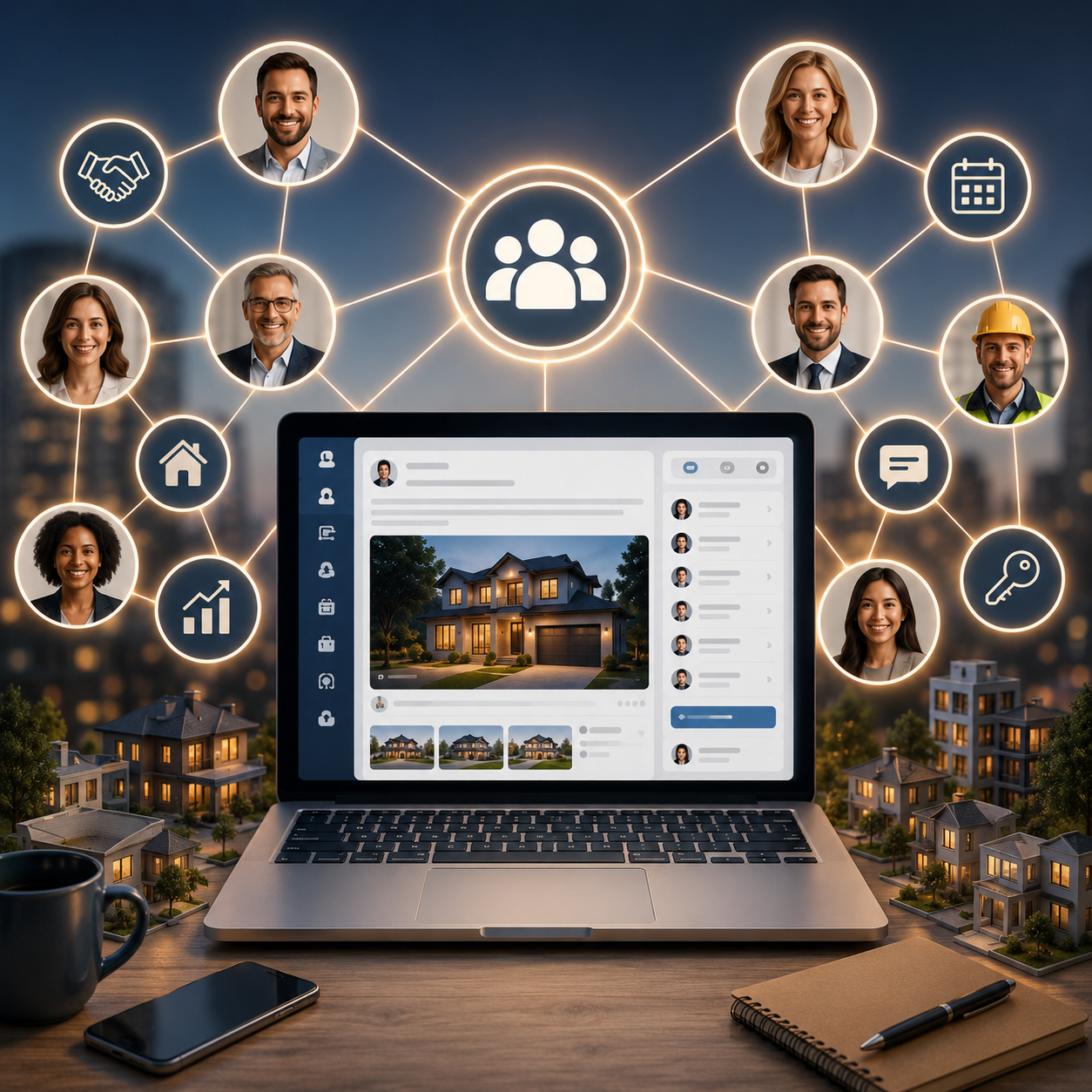
Private Social Network: 8 Powerful Reasons to Love Them
Where Is Your Digital Lobby?
Most organizations already have a website, social media accounts, email marketing, and a customer database. What many still do not have is a true digital gathering space — a place where members, clients, customers, professionals, vendors, and participants actively interact with one another inside a controlled environment.
That gap is creating a major opportunity for developers, consultants, agencies, and entrepreneurs who build and manage a private social network.
A website distributes information. Social media distributes attention. A private social network creates ongoing involvement, recurring interaction, and long-term monetization opportunities. It becomes the digital lobby of an organization — the place where conversations happen, introductions are made, deals begin, and participation becomes habitual.
Organizations across legal, healthcare, education, coaching, real estate, nonprofits, associations, and professional services are starting to recognize that public social platforms no longer provide enough control, reach, or retention. Algorithms interfere with visibility. Audiences are fragmented. Engagement is temporary. Data belongs to someone else.
A well-structured private social network changes that equation completely.
1. A Private Social Network Creates Owned Attention
Organizations spend enormous amounts of money driving traffic to platforms they do not control. Facebook groups, LinkedIn feeds, Instagram posts, and YouTube channels can all disappear from visibility overnight because of algorithm changes.
A private social network gives organizations direct access to their own audience without competing against unrelated content, advertising noise, or platform restrictions.
When users log into a dedicated network environment, the organization controls:
- Visibility
- Messaging
- User experience
- Content distribution
- Notifications
- Access levels
- Advertising opportunities
- Data collection
That level of control turns attention into an asset instead of a temporary rental agreement with a third-party platform.
2. High-Involvement Communities Produce More Revenue
The businesses generating the highest lifetime customer value are often the businesses with the highest frequency of interaction.
A private social network increases touchpoints dramatically because users are not simply visiting a website once and leaving. They are participating repeatedly through:
- Discussions
- Groups
- Direct messaging
- Events
- Content sharing
- Professional networking
- Resource exchanges
- Live streams
- Member-only updates
- Community activities
The more frequently users return, the more opportunities exist for monetization.
This is where developers and platform creators can position themselves strategically. The opportunity is not merely building software. The opportunity is designing digital environments that increase participation and transactional activity.
High involvement creates:
- Subscription revenue
- Sponsorship revenue
- Advertising inventory
- Event registrations
- Lead generation
- Referral networks
- Premium memberships
- Marketplace activity
- Professional services opportunities
The network itself becomes infrastructure for commerce.
3. Organizations Need Digital Infrastructure, Not Just Marketing
Many businesses still approach digital strategy as a marketing problem when it is increasingly an infrastructure problem.
Organizations need environments where their audiences can remain connected continuously instead of episodically.
A private social network functions as operational infrastructure because it supports:
- Communication
- Collaboration
- Relationship management
- Client interaction
- Member retention
- Knowledge sharing
- Audience segmentation
- Community development
This is particularly important for industries built around long decision cycles and ongoing relationships.
For example:
- Law firms can create intake communities and educational discussion groups.
- Real estate professionals can build client relocation and investment communities.
- Medical practices can create patient education environments.
- Trade organizations can centralize member activity.
- Coaches and consultants can create ongoing engagement ecosystems.
The developer who understands business operations — not just coding — becomes significantly more valuable.
4. Private Networks Reduce Dependence on Public Platforms
Public social platforms are increasingly unpredictable.
Organic reach continues to decline. Advertising costs continue to rise. Audiences are overloaded with competing content. Even highly engaged followers may never see important updates.
A private social network allows organizations to migrate their most valuable audience relationships into an environment they own directly.
This changes the economics of audience development.
Instead of continuously paying to reacquire attention through advertising, organizations can retain audience participation inside their own ecosystem.
That creates:
- Lower long-term acquisition costs
- Better retention rates
- More accurate data collection
- Higher engagement consistency
- Better conversion opportunities
Developers who can build systems that reduce platform dependency are solving a major business problem.
5. The Future Is Smaller, Specialized Communities
Mass social media platforms created enormous audiences but weaker relationships. Users increasingly want more focused environments where discussions are relevant, targeted, and valuable.
This trend favors specialized private social network communities centered around:
- Professional industries
- Shared interests
- Geographic regions
- Educational programs
- Membership organizations
- Client ecosystems
- Business verticals
Smaller networks often generate stronger engagement because users share clearer common interests and objectives.
That creates opportunities for niche developers and operators who understand specific industries deeply.
A generic platform builder may struggle. A developer who understands the workflow, communication style, and monetization structure of a target industry can build something significantly more valuable.
Industry specialization may become one of the biggest differentiators in the private network market.
6. Revenue Models Extend Far Beyond Membership Fees
One mistake organizations make is viewing a private social network only as a subscription product.
In reality, network environments support multiple simultaneous revenue channels.
Potential monetization models include:
- Premium memberships
- Sponsorship placements
- Advertising packages
- Vendor directories
- Featured listings
- Paid webinars
- Event access
- Educational programs
- Referral partnerships
- Lead generation systems
- Marketplace transactions
- Professional networking upgrades
A well-designed network can become a multi-layer business ecosystem rather than a standalone website.
For developers, this means the value proposition is not simply technical implementation. It is revenue architecture.
Organizations are increasingly willing to invest when they see direct monetization potential attached to community engagement.
7. Data and Relationships Become Strategic Assets
Organizations often underestimate the long-term value of behavioral data and relationship mapping inside a private social network.
When users consistently interact within a controlled environment, organizations gain insights into:
- Interests
- Engagement patterns
- Buying behavior
- Professional relationships
- Participation frequency
- Content preferences
- Community activity trends
That information becomes strategically valuable because it improves:
- Marketing precision
- Product development
- Retention strategies
- Partnership opportunities
- Audience segmentation
- Revenue forecasting
At the same time, the relationships themselves become assets.
The stronger the network connections become, the harder the community is to replace.
That creates long-term business stability.
8. Developers Who Understand Engagement Will Lead the Market
The next generation of successful platform developers will not simply build functional systems. They will build environments engineered for participation.
Technology alone is not enough.
Successful private social network environments require:
- Thoughtful onboarding
- Community structure
- Incentive systems
- Moderation tools
- Engagement architecture
- Content circulation strategies
- User segmentation
- Mobile accessibility
- Revenue integration
Developers who combine technical execution with business strategy, community psychology, and monetization planning will occupy the highest-value position in the market.
Organizations are not looking only for coders. They are looking for digital infrastructure partners.
The Digital Lobby Is Becoming Essential
Every organization has a front door. Increasingly, they also need a digital lobby.
A website may introduce the organization. Social media may attract visibility. But a private social network creates an environment where relationships continue developing over time.
That distinction matters.
The organizations that control their own audience environments will likely have stronger retention, better monetization opportunities, and greater long-term stability than organizations relying entirely on public platforms.
For developers, consultants, and digital entrepreneurs, this represents a substantial opportunity.
The demand is no longer limited to large technology companies. Professional firms, associations, educators, service providers, media companies, and niche communities are all looking for ways to create deeper engagement and recurring interaction.
The market is shifting from broadcasting information to building participation ecosystems.
The businesses that create the next generation of digital lobbies may ultimately control some of the most valuable communities online.
Check out my NEW Private Social Network Site
Related Posts






A quick overview of the topics covered in this article.